

Keeping perennial gardens looking their best through fall
With the busyness of spring and early summer in the garden past, late fall clean-up still months on the horizon, and the focus on reaping the harvest of vegetable gardens, mid-summer to early fall can be a time when our perennial gardens are on autopilot. However, there are many things we can actively do during July, August and September to ensure our ornamental gardens look their best and to lay the groundwork for a successful garden next year.
Watering
In addition to the heat, mid-summer to early fall can experience extended periods of dry spells. Monitoring and addressing soil moisture conditions in your garden is important. New plantings should be checked several times per week. Established plants can go for extended periods with little water. Check the top six inches of the soil and water if it’s dry. Water the base of plants in the early morning, taking care to avoid getting leaves wet. Watering early allows leaves to dry during the day. Water deeply and infrequently to promote deeper, healthier roots.
Deadheading and Plant Division
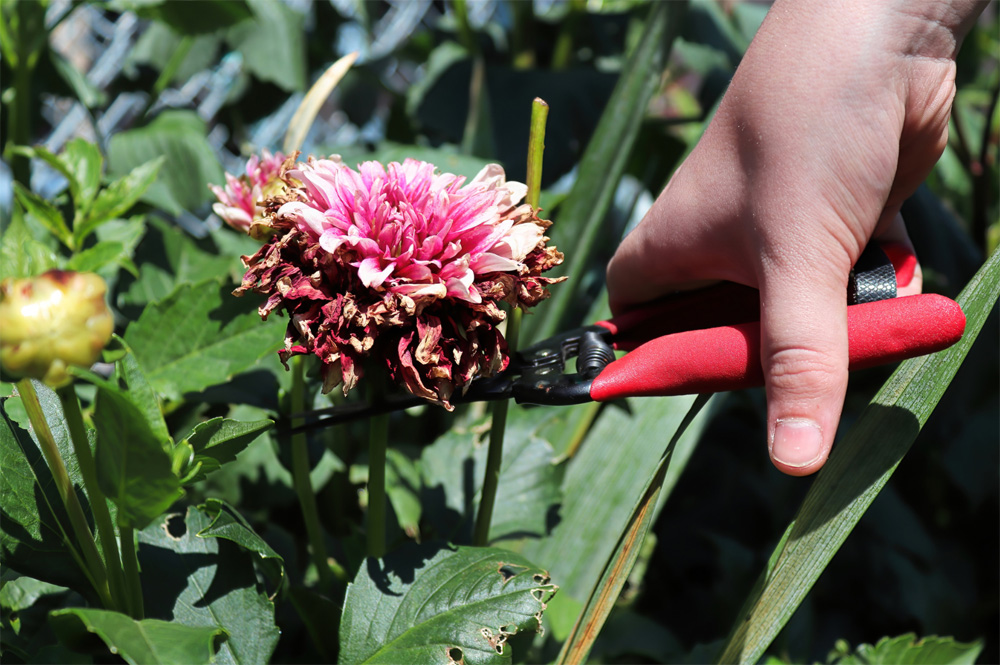
Rejuvenate your perennials through deadheading and selectively dividing your plants. Deadheading is the process of removing faded flowers. Use a pruner to snip the stem below the flower and just above the first set of leaves. Deadheading encourages flowering by preventing seed formation. It promotes prolonged blooming and keeps your plants and garden looking robust. You can deadhead through September but may want to leave some seed pods for winter interest and food for birds. Cutting back faded summer blooms is another good way to improve their appearance and the overall tidiness of your garden.
Dividing overcrowded plants reduces competition for nutrients, water, and opens airflow, increasing plant resiliency against diseases. It also allows control of plants size and spreading, can stimulate new growth, and increases the number of plants that you have. Generally, you should divide plants that flower in the spring and summer during late summer or fall and divide fall-blooming perennials in the spring. However, the best time to divide specific varieties can be more nuanced. Fall dividing should be completed four to six weeks before the ground freezes. This allows the plant’s roots to become established. The University of Minnesota Extension provides plant division guidance – how and when – with specific information for 125 common perennials.
Fertilizing
If you have concerns about soil nutrients and health, your best course of action is to get a basic soil test from the University of Minnesota’s Soil Testing Laboratory. The test provides a soil texture estimate, organic matter content, phosphorus, potassium, pH and lime requirement. The analysis will also come with a basic interpretation of results and provide recommendations for fertilizing. With your soil test in hand, you can use the Extension’s quick guide to fertilizing plants to determine your next course of action.
Pests
Continue weeding your garden to reduce the number of weeds you’ll need to deal with next spring. Weeding can also be an effective cultural control for some insect. Remove spotted and diseased leaves as soon as they are found. Consider thinning plants with powdery mildew to reduce mildew or move mildew infested plants to a sunnier area. Monitor your garden for insect problems. The sooner you detect a detrimental pest the better. The Extension has an extensive guide for identifying and managing insects in your flower garden.
Planning
Even though you are still enjoying this year’s garden, this is a great time of year to start planning for next year. Order spring-flowering bulbs in September. They should be planted by the end of September if you live in northern Minnesota and by mid-October if you live in the southern part of the state. This will allow the bulbs to establish roots before the ground freezes. September is a good time to assess changes to your garden plants and layout and possibly even expansion. Compile your wish list of plants to add to next year’s garden. If expansion is in your plans this is the time to kill or remove grass, get a soil test, and amend the soil. Solarization is an effective way to remove vegetation to make room for a new or expanded garden, not to mention removing weeds if they are overrunning your existing garden. Finally, don’t forget to take pictures and video. They’ll help with winter planning and bring pleasant memories on cold winter days.
By Mike Knoff, Master Gardener volunteer intern