
Medicinal Herb Garden
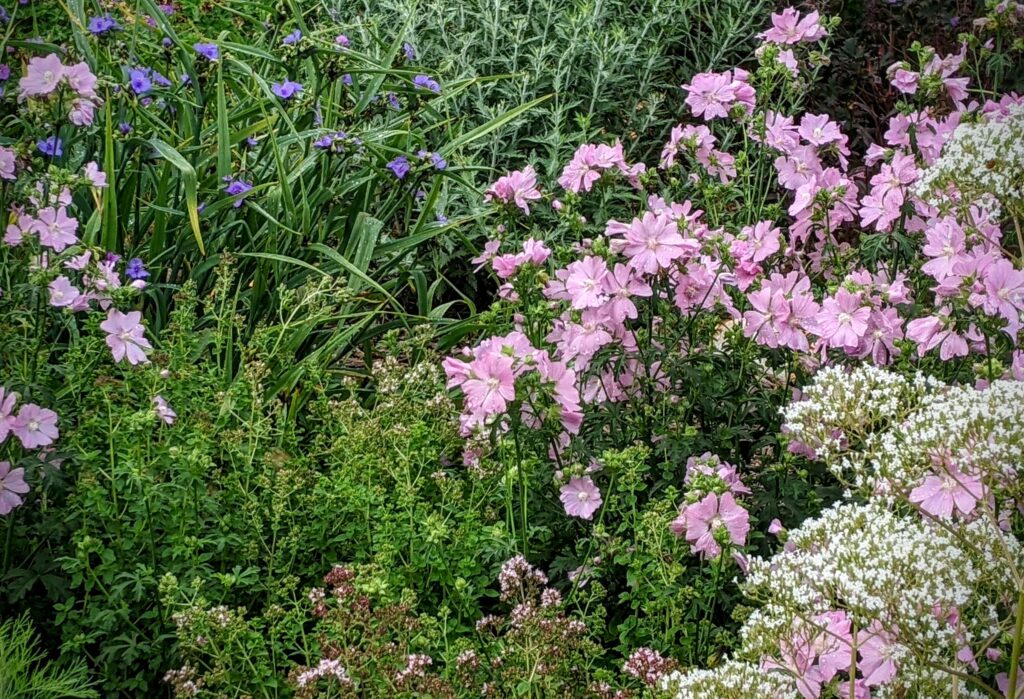
Long before there were pharmacies to run to for cold tablets, people depended on their gardens to improve their well-being and provide medicine for illnesses. For everything from insect bites to heart disease, medicinal herbs have contributed critical ingredients to medicine in today’s world. The herbs are typically used as either fresh or dried plants and are sold as tablets, capsules, powders, teas or extracts.
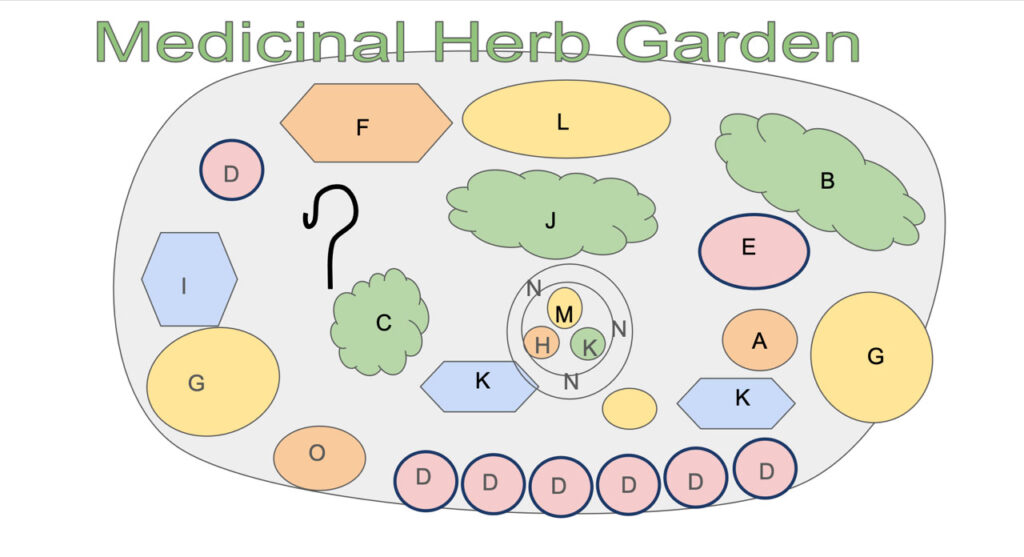
Plant List
A catmint – Nepeta cataria – digestive system disorders; reduces fevers
B comfrey – Symphytum uplandicom – minor wounds/joint pain; don’t take orally or put on open wound (closed wound only)
C lemon grass – cymbopogon martini — aiding digestion, reducing inflammation, and potentially improving heart health
D ladies mantle – Alchemilla mollis – diuretic, anti-anemic, anti-diabetic; wounds, ulcers, hernias, muscle atrophy, eczema
E mallow – Malva sylvestris – soothing agent to counter irritation and mild inflammation; tea for sore throats/dry coughs
G oregano — Origanum vulgare – antimicrobial, antiviral, antifungal, antioxidant, anti-inflammatory, antidiabetic, cancer suppressor
H southernwood – Artemisia abrotanum – air freshener, insect repellant
I spiderwort – Tradescantia ohiensis – roots are laxative; tea treats kidney/stomach/female ailments; insect bites; cancers
J chamomile – matricaria recutita –
K yarrow – Achillea millefolium – used as tea to fight colds/fevers; chewing can relieve toothache; infused in oil for bruises, burns, rashes and insect bites
L golden rod – Solidago altissima – treatment for UTIs and kidney stones; diuretic
M calendulal – calendula officinalis
N lavender — Lavandula angustifolia – inhalation for headaches, nervous disorders, exhaustion; fungal infections, wounds, eczema, acne; joint & muscle pain
O borage – borago officinalis L. — skin inflammation, rheumatoid arthritis, and respiratory issues, thanks to its anti-inflammatory properties